


The GIA Diamond Color and Clarity Chart evaluates a stone’s visual value using two distinct scales: the Color scale ranks diamonds from D (Completely Colorless) to Z (Noticeable Light Yellow), while the Clarity scale measures microscopic inclusions from Flawless (FL) to Included (I3).
In the 2026 market, the absolute “Truth” that mall jewelers try to hide is that the G color diamond and the Eye-Clean SI1-VS2 clarity range look indistinguishable to the human eye from the highest tier grades, yet they cost roughly 40% to 50% less.
Look, let’s have a candid, unfiltered talk as friends. You’ve probably seen 100 different diamond clarity and color charts by now. They all look like sterile science experiments. But here’s the problem: you aren’t buying a science experiment; you are buying an investment for a forever-moment.
Visual Perfection: Skip the “Paper Tax.” Use HD 360° technology to find the perfect Eye-Clean SI1-VS2 diamond. Explore premium settings at James Allen .
Smart Value: Access the Clear The Vault Sale for GIA-certified G-H color diamonds. Get the “Elite Look” for 40% less by shopping the 2026 inventory at Blue Nile .
I’ve seen many people land on this guide this year because they are paralyzed by the fear of choosing the wrong grade. Are you a “D-IF or bust” person, or do you actually want a stone that makes her say “Yes” without leaving you in ten years of debt?
As a GIA-trained insider, I’m pulling back the curtain on why you should almost never buy a D-color, Flawless diamond. In this guide, I’m revealing the 7 secrets to stop overpaying, how the anatomy of an engagement ring hides flaws for free, and exactly why current diamond prices dropping trends favor the buyer who knows how to spot an “Eye-Clean” winner.
Mehedi’s Bottom Line Recommandation
The Bottom Line Recommendation
✅ Mehedi’s Winning Picks
- Target a G or H color grade. In 2026 settings, they are the secret “Sweet Spot” for maximum visual whiteness without the Colorless price tag.
- Insist on “Eye-Clean” SI1 Clarity. Use a loupe to ensure inclusions aren’t under the table—this gives you a VVS-look for an SI-price.
- Neutralize warm tints by pairing Faint Color Diamonds (K-M range) exclusively with yellow gold bands to enhance their romantic, heirloom glow.
- Never skip the GIA or AGS certification. These reports are the only “Standard of Truth” recognized in the international trade and resale market.
❌ What to Skip in 2026
- Stop paying the “Paper Perfection Tax.” D-Flawless stones look exactly like G-VS2 stones on a finger but cost 50% more.
- Watch out for Strong Fluorescence in D-F grades. In natural sun, it can choke the brilliance and turn your diamond cloudy or “milky.”
- Avoid massive color gaps between stones. Ensure your engagement ring and band share the same hue profile.
- Never buy based on a Stock Photo. Always verify an SI-stone through 360-degree HD videos to confirm it’s actually eye-clean.
Diamond IQ Test: Natural or Lab-Grown?
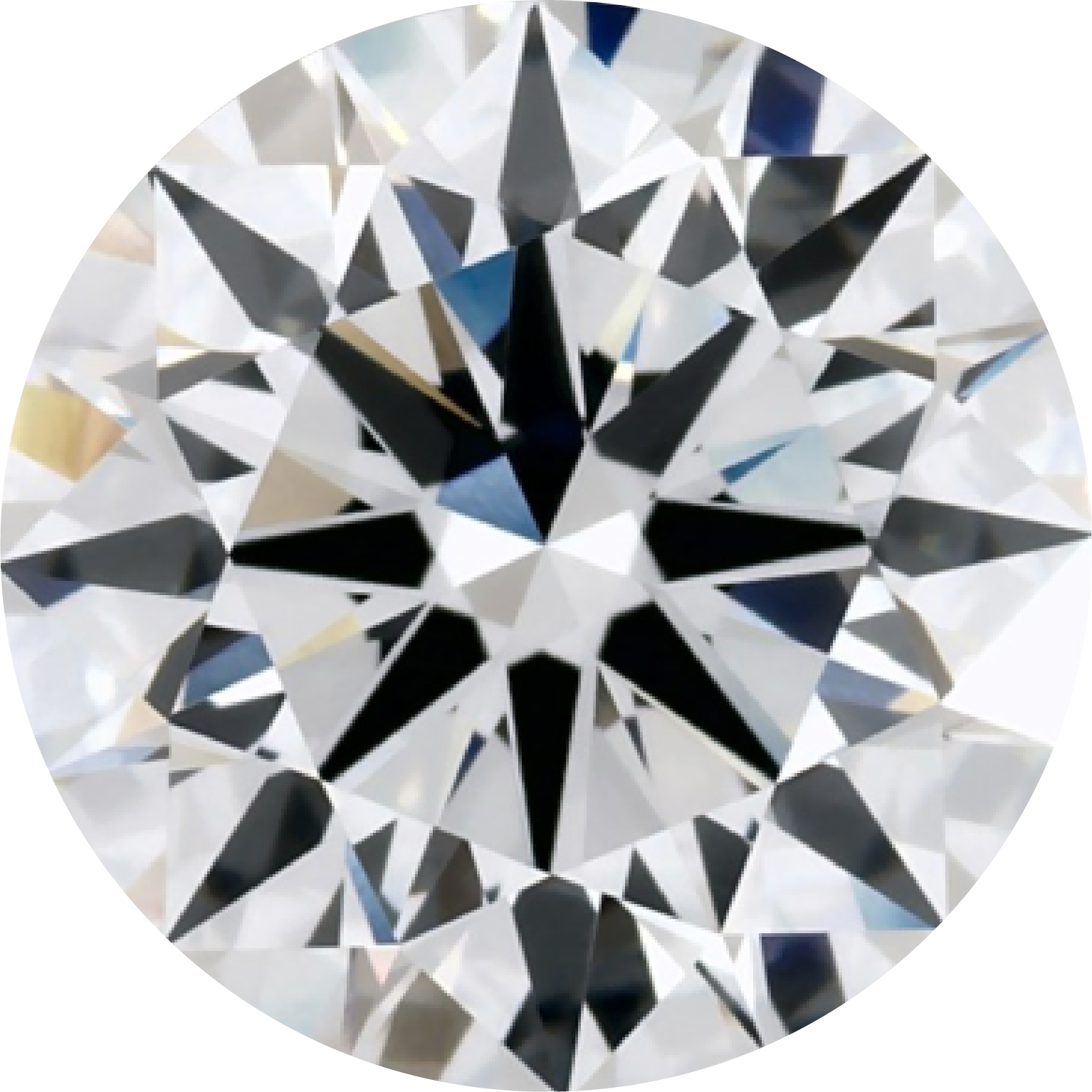
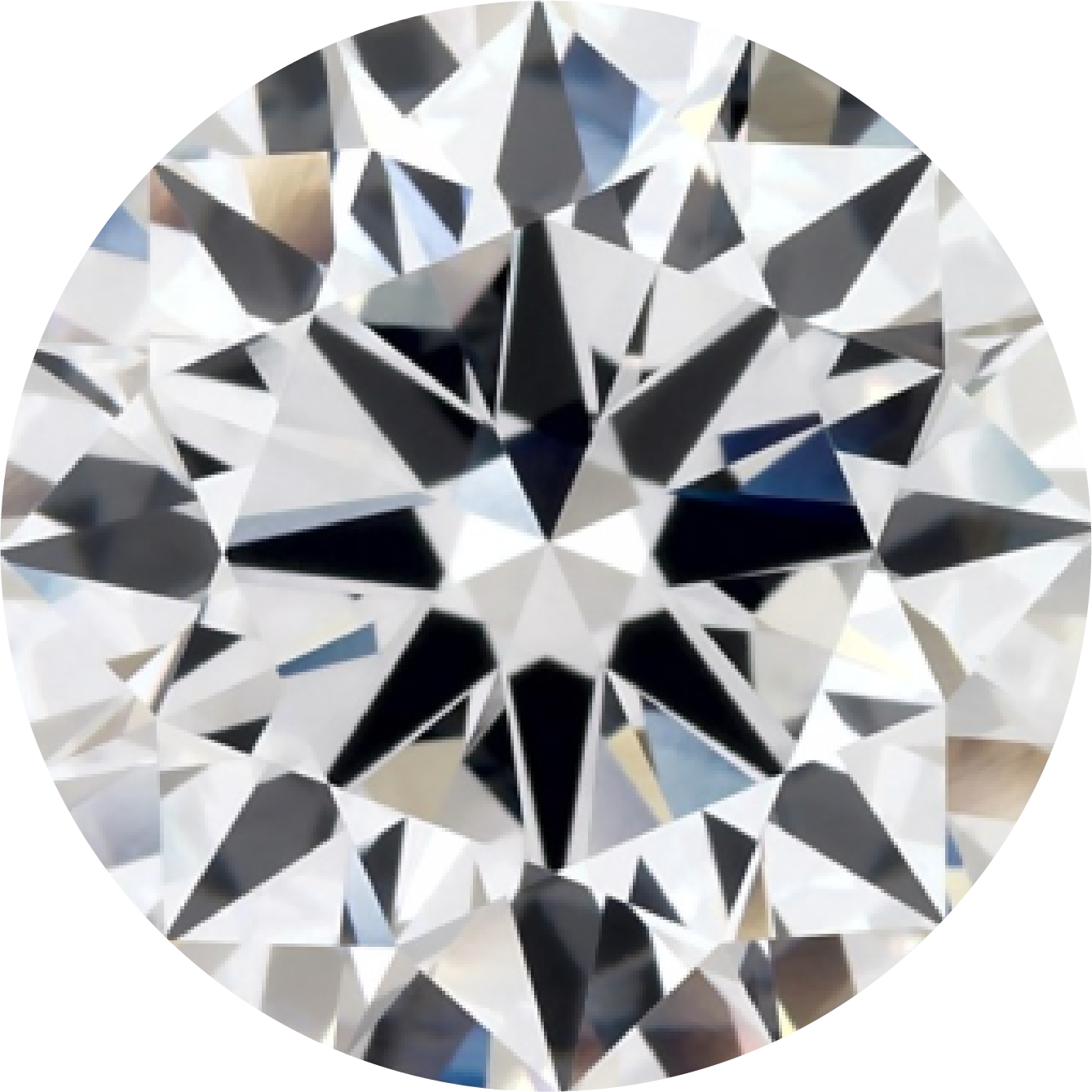
Two identical diamonds: GIA Certified, 1.51ct, D Color, VVS1, Ideal Cut. One is natural ($16,530), the other is lab-grown ($2,390). Choose the diamond you like better and see if you can match it to its origin.
7 Secrets to Stop Overpaying for Diamond Color and Clarity
If you’ve spent any time looking at a diamond color and clarity chart, you’ve probably noticed that the price doubles as you move toward the top-left corner of the grid. But here is the professional reality for 2026: a significant portion of that price jump is “invisible value” that serves only to pad the retailer’s profit margins.
In the jewelry vault, we spend our lives explaining the color and clarity of a diamond chart in terms of rarity—but rarity on a paper report doesn’t always equal beauty on her finger.
Whether you are looking for the best diamond color and clarity for a custom anniversary band or simply trying to find out is color or clarity more important, these seven secrets will redefine how you spend your budget at places like James Allen or Blue Nile.
Secret 1: The “G-Color” Identity Crisis
In the GSC data, I’ve seen hundreds of buyers searching for a g clarity diamond. Here is the first candid correction from a pro: “G” is a color grade, not a clarity grade. However, G-color is the single most valuable secret in the industry.
- The Trap: Most buyers overpay for D, E, or F grades thinking they need “colorless” to get a bright white look.
- The 2026 Truth: G is the top of the near colorless diamond tier. When set in a ring, G looks 100% colorless to everyone but a certified gemologist under specialized laboratory light.
- The Value Play: By choosing a G-color diamond over a D-color, you can save roughly 25% of your total budget. That is cash you should use to upgrade the diamond carat size because size is what people notice—not a two-grade difference on a paper certificate.
Secret 2: Why Your Metal Choice Defines Your Clarity Needs
You should never finalize your diamond purity chart goals until you’ve decided on the metal of your band. The metal color will physically change the color appearance of the stone through a process called “Tints Bleeding.”
- For Platinum and White Gold: You must stick to the D-H range. These cool metals reflect the “icy” whiteness of the stone. A J-color stone will look visibly yellow against these metals.
- For Yellow and Rose Gold: This is the ultimate budget hack. Yellow gold creates a warm “Reflection” within the stone. You can safely drop down to a faint color diamond like a K, L, or M. The warm metal makes the light-yellow tint look like a deliberate design choice, and you’ll find some of the best place to buy engagement rings online offer massive discounts for these lower color grades.
Secret 3: The 40% Resale Reality Check
Before you spend a premium on a Flawless (FL) or Internally Flawless (IF) stone, I want to give you the cold reality of selling diamond rings at a pawn shop. Pawn shops and estate jewelers do not pay “rarity premiums.” They pay based on the wholesale commodity weight of the gold and the visible diamond specs.
- If you spend $10,000 on an IF diamond, the resale market might treat it as a $5,000 stone because “Flawless” doesn’t have high liquidity outside of luxury boutiques.
- Buy for the finger, not the “resale dream.” Higher grades are for collectors; near colorless stones are for smart buyers.
Secret 4: Face-Up Fire Can “Hide” Inclusions
A common myth on every diamond clarity scale is that an inclusion (a “flaw”) always hurts the look of the stone. As a jeweler, I tell my friends that the cut is the savior of clarity.
- If you choose a stone with an Ideal or Triple Excellent Round Brilliant cut, the intense light performance creates “Glance Scintillation.”
- This white light and fire acting as a shield makes it nearly impossible to see a pinpoint inclusion in an SI1 diamond. You can often drop down from the “Near-Perfection” VVS tiers and get a larger stone with an SI1 or SI2 grade, provided the stone is verified as “Eye-Clean.”
Secret 5: Clarity Differences by Diamond Shape
The diamond color clarity scale behaves differently depending on the silhouette of your stone. If you don’t know the anatomy of an engagement ring, you might pick the wrong grade for your specific shape.
- Round and Princess: Highly brilliant. They hide inclusions very well.
- Emerald and Asscher: These are “Step-Cuts.” They have large, open facets like windows. If you use the same SI1 logic for an emerald cut diamond that you use for a round brilliant, the flaws will be highly visible.
- The Secret: For Ovals and Pears, always look for eye-clean diamonds. These elongated shapes often trap shadows in the center, and a poorly placed inclusion will stand out.
Secret 6: The “Cloud” Scam (How to Spot a Fake “Clear” Stone)
When people ask me “what’s the highest clarity diamond?”, I warn them to look for transparency, not just a name.
I’ve analyzed rodiffy moissanite reviews and big chain retailers who sell “SI1/SI2 diamonds” at massive discounts. Usually, these stones are “Cloudy.” They have microscopic inclusions that are so dense that even if there are no black spots, the entire stone looks “oily” or milky in natural sunlight.
- The Test: Always look at the GIA report notes for the phrase “clarity grade is based on clouds not shown.” If you see that, walk away. Your stone will never sparkle properly. Check our SI2 clarity chart for what a high-performance budget stone should look like.
Secret 7: Is Color or Clarity More Important? The GIA Verdict
To wrap up the most debated question on the color and clarity diamond chart: Color is almost always more important than clarity.
- Why? You will notice a slight yellow tint in a large diamond from five feet away. You will never notice a microscopic inclusion without a 10x jeweler’s loupe and a direct light.
- Mehedi’s Buying Order: Priority 1: Cut. Priority 2: Color (Target G-H). Priority 3: Clarity (Target SI1 or VS2). By prioritizing color and cut, you ensure a stone that “shouts” across the room with brightness, even if the diamond purity isn’t scientifically perfect.
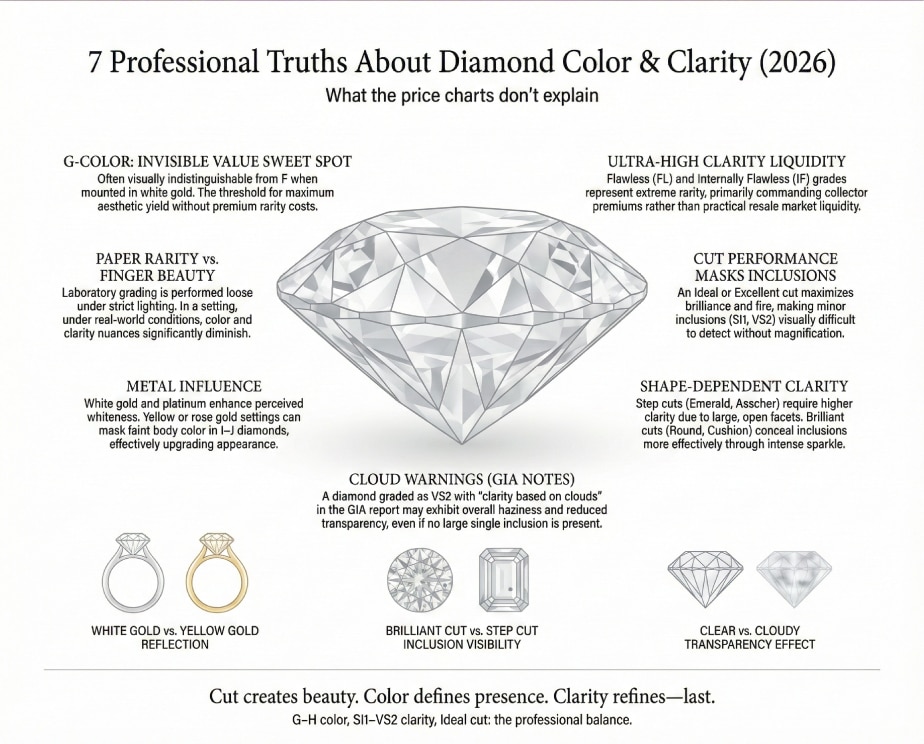
2026 Buying Blueprint: Diamond Quality vs. Wallet Performance
This table breaks down where you should spend your cash in the current market. As diamond prices are dropping for 2026, the value of the “G-Color VS2” has reached an all-time high.
| Spec Tier | Target Color Range | Target Clarity Range | Value For Money | Mehedi’s 2026 Recommendation |
|---|---|---|---|---|
| Elite Perfection | D – E – F | IF – VVS1 | Low | For serious collectors and elite status where “paper perfection” is the goal. |
| High Fashion | G – H | VS2 – SI1 | MAXIMUM | The Insider’s Sweet Spot. Looks completely flawless to humans; best ROI. |
| Budget Choice | I – J | SI1 – SI2 | High | Excellent value if paired with Yellow Gold settings to mask the slight warmth. |
| Artistic / Antique | K – M | I1 – I2 | Varies | Avoid unless you specifically desire a vintage, “candlelight” warm tone. |
Technical Analysis of Inclusions (Under the Loupe)
When browsing a diamond grading chart, don’t be afraid of common inclusions—learn how they impact diamond purity. Not all inclusions are equal “scams” in the diamond category chart.
- Pinpoints (Safe): Small dots scattered inside. These are almost always invisible to the eye and won’t affect light.
- Crystals (Variable): Smaller diamond or carbon chunks. If they are white, you’re fine; if they are black and in the center, it’s a “no.”
- Feathers (Warning): Tiny cracks inside. Avoid these if they are on the very edge (the girdle) as they could lead to a chip upon high impact. For a safety guide, see our GSI certification report on setting protection.
- Twinning Wisps (Pro Hack): Found in many lab diamonds. They often don’t hurt sparkle at all but can drop the clarity grade (and price!) for you significantly.
If you are using our Aurelia price calculator for a real-time price check, remember that diamond chart color and clarity are 100% subjective once the ring hits the hand.
My final advice: shop in the “Near Colorless” range and the “Slightly Included” tier. You save the money needed for your mortgage or honeymoon while owning a diamond that passes every visual test of luxury.
Understanding the 4Cs: Why Diamond Color and Clarity Matter
In my GIA training, we were taught that a diamond’s worth isn’t just about its “glow”—it is a scientific DNA score based on four variables. If you want to know what color and clarity diamond should i buy, you first have to master the 4Cs.
Every stone on a diamond grading chart is judged by its Color, Clarity, Cut, and Carat weight. While these factors work together to define rarity, I’ll give it to you straight: Color and Clarity are the two factors where most buyers waste thousands of dollars on details that are invisible to the naked eye.
Cut dictates how well a stone sparkles, and Carat refers to the physical size, but the color and clarity of diamonds are nature’s fingerprints. You are essentially paying for the absence of color and the absence of microscopic “birthmarks.”
In the high-stakes 2026 market, your goal shouldn’t be to find the “perfect” diamond on paper, but the diamond that looks perfect on her finger while keeping your budget intact.
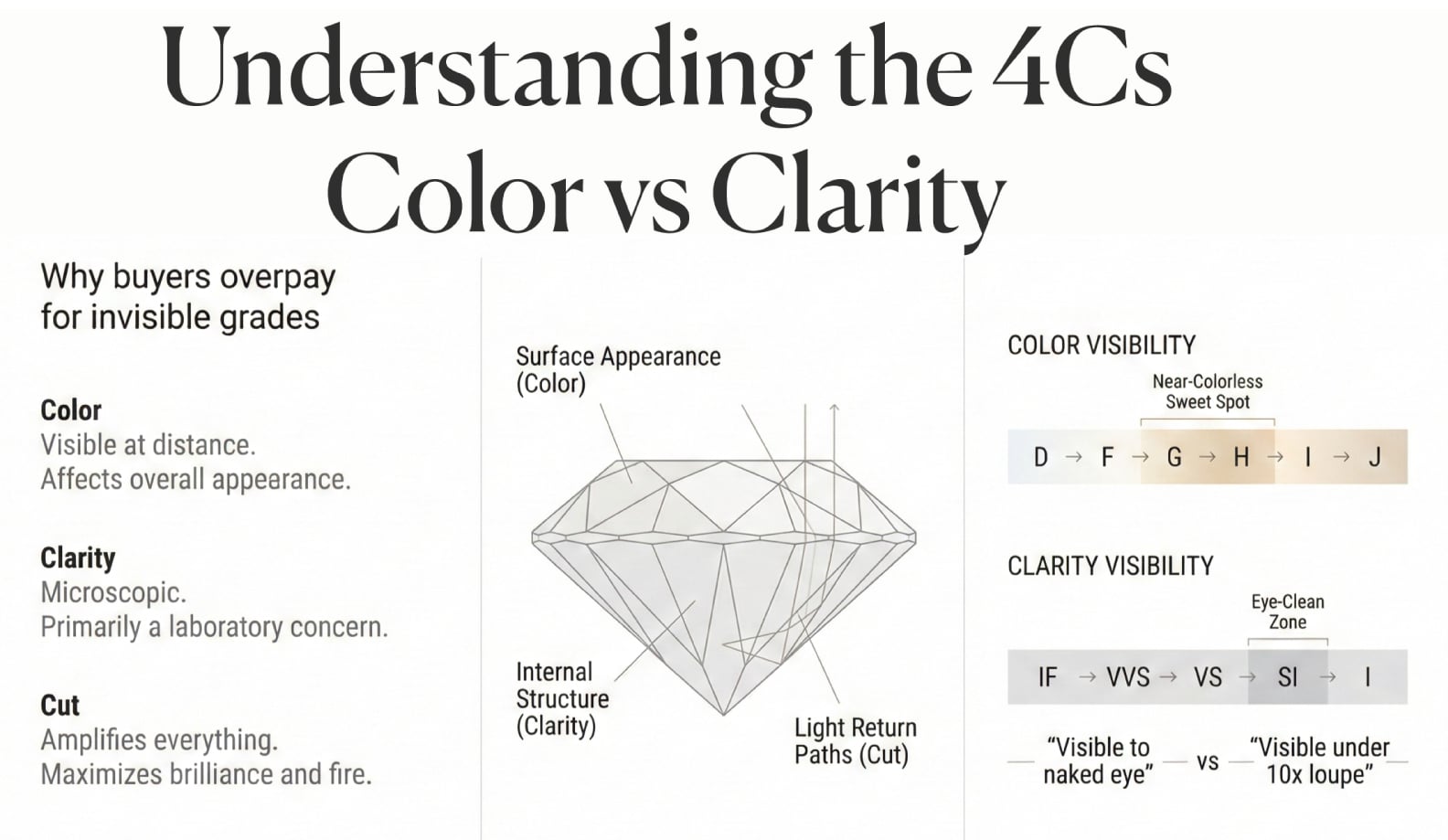
The Impact of Color vs. Clarity
If you’re staring at a diamond purity chart, it’s easy to feel overwhelmed. Most searchers ask me, “is color or clarity more important?” The honest trade answer is that color usually has a more immediate impact on visual beauty.
You will notice a yellow tint in a large stone from several feet away, but you won’t see a microscopic pinpoint in a VS2 clarity grade without a jeweler’s loupe.
As your friend in the trade, my buying priority order for 2026 is always Brilliant Cut first, Color second, and Clarity third. By focusing on a near colorless diamond in the G-H range, you secure a bright, white stone that masks clarity imperfections naturally.
Unless you are specifically hunting for a highest clarity diamond for investment liquidity, you should focus your cash on “Eye-Clean” value rather than scientific perfection.
The Role of the Setting and Lighting
One thing no mall jeweler will tell you is that the anatomy of your engagement ring acts as a free filter for the stone. These two factors—Color and Clarity—change drastically once they leave the laboratory lighting.
For instance, a stone that looks slightly “warm” on a diamond color and clarity chart can appear icy-white if set in yellow gold, which absorbs the yellow tones. Conversely, internal flaws that might look scary on a diamond clarity chart can be completely hidden by a well-placed prong or the sheer “fire” of a high-quality cut. This interaction is the secret to finding eye-clean diamond values that outshine stones twice their price.
2026 Buying Verdict Table: Choosing Your Value Baseline
I built this 2026 breakdown to show you exactly how to navigate the diamond color and clarity scale without falling into the “Paper Grade Trap.”
| Your Main Priority | Best Color Choice | Best Clarity Choice | Mehedi’s Market “Why” |
|---|---|---|---|
| Max Visual Fire | G – H | VS2 – SI1 | By not overspending on invisible purity, you can allocate your cash to the Cut Quality, which drives 100% of the sparkle. |
| Investment Legacy | D – E | VVS1 – VVS2 | A pure status move. These specs maintain a high price-floor in the resale and auction market. |
| Highest Carat / Size | I – J | SI1 – SI2 | The “Warm Metal Hack”: Yellow or Rose gold settings hide these slight tints for free, allowing you to buy a much larger stone. |
| Expert Sweet Spot | G Color | VS1 | The best mathematical trade-off of elite quality vs. 2026 pricing trends. The “Goldilocks” zone. |
The Technical Importance of Table Size
Don’t let the diamond color and clarity chart be your only research stop. In the vault, we pay close attention to the stone’s “table.” The table is the large, flat facet on the very top of the gem. If the table is too wide, it acts as a window that reveals every clarity flaw inside.
To make the most of your diamond quality chart choices, look for a stone where the table is well-proportioned to the crown. If you choose a stone in the VVS2 diamond clarity range, you can afford a wider table. But if you are trying to hide inclusions in a more affordable stone, stick to the standard proportions to ensure the sparkle masks the internal DNA of the diamond.
Diamond Color Chart Explained
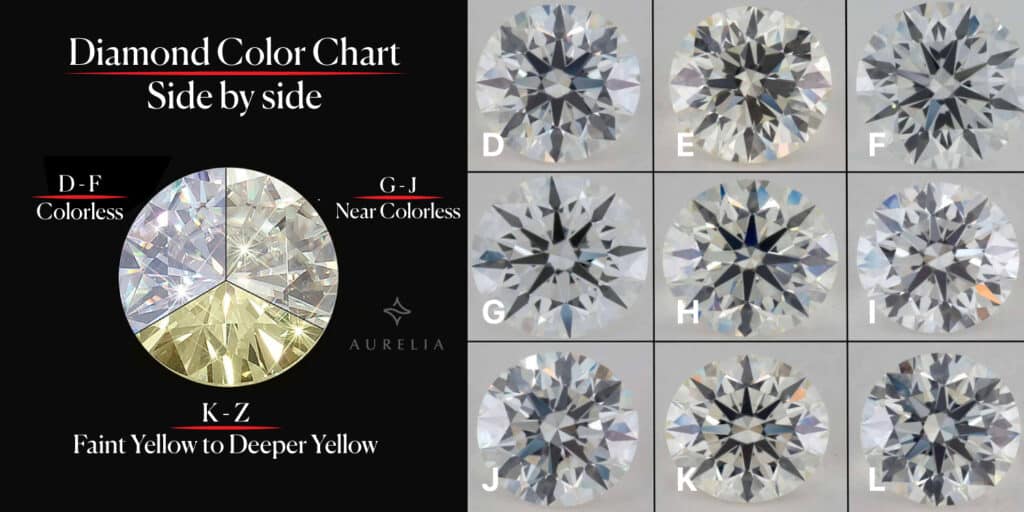
The diamond color chart is a scientific 23-point scale established by the GIA that measures a gemstone’s degree of colorlessness, ranging from D (the rare absence of any hue) down to Z (visible light yellow or brown).
In the elite jewelry world of 2026, choosing the correct grade from the diamond color chart is the single most effective way to protect your wallet while ensuring your center stone has an icy-white, high-end presence on her hand.
Look, let’s be brutally honest as friends in the trade. Retail stores spend billions in marketing to make you believe that only “D” color diamonds are the “Best.” But after years in the vault, I can tell you that the difference between a D and a G is essentially invisible without the background lighting of a professional gem lab.
If you are browsing a diamond color and clarity chart right now, you need to understand that the color grade represents the stone’s rarity and commodity price floor, not necessarily its visual beauty in your engagement ring setting.
What is Diamond Color in the 4Cs?
Technically, a diamond color and clarity scale ranking for color isn’t a measurement of “how much” sparkle is there—it’s a measurement of the purity of the carbon crystal. When diamonds were formed under pressure billions of years ago, they often trapped traces of nitrogen or boron.
This resulted in a faint color diamond or a slight yellowish hue. In the GIA labs, we look at the diamond face-down against a stark white card to see that true natural fingerprint.
I always remember my friend Lisa, who was obsessed with buying “perfection.” She insisted on a D-color, Flawless stone for her ring because “it’s a symbol of her love.” I placed a near colorless diamond (specifically a G-grade) right next to her choice.
Under the jewelry shop’s lights, her naked eye couldn’t find the difference. By switching to that G-color stone at James Allen, she saved exactly $3,800. She kept the “GIA Master Set” look while freeing up thousands of dollars for a higher carat size.
Breaking Down the GIA Diamond Color Scale
To find your perfect diamond colour chart match, you need to think in “Trade Categories” rather than individual letters. This is the expert’s roadmap to spending your cash where it shows up:
- Colorless (D – F): The rarest elite group. D-color stones are like chemically pure water. I only suggest these for a platinum halo engagement ring where there is zero warm metal to distract the eye.
- Near-Colorless (G – J): The “Secret Sweet Spot.” Stones like G or H appear totally white when set in high-polish jewelry. These are expert-recommended color grades because you save up to 40% on price compared to the Colorless group.
- Faint Tint (K – M): These stones carry a “Warm/Champagne” hue. If you choose our 14k yellow gold ring designs, this warmth looks romantic and antique.
- Noticeable Hue (N – Z): Generally less desirable for traditional bridal pieces, unless you are seeking a specifically yellowish boho look at a heavy discount.
Mehedi’s Market Snapshot: Diamond Color Price & Pairing Guide (2026)
This table answers the intent for users searching for “diamond color and clarity ratings” versus their bank accounts.
| GIA Color Group | Trade Descriptor | Visual Integrity (Hand View) | Best Choice for Metal | Market Valuation Trend |
|---|---|---|---|---|
| D – E – F | Elite Colorless | Crisp, Icy, Pristine. No warmth visible even under magnification. | Platinum or White Gold | Overpriced for 90% of buyers. You are paying for rarity, not visible performance. |
| G – H | Near-Colorless Peak | Identical to D in 14k metal settings to the naked eye. | All Metals (Versatile) | Highest Value / Lowest Markup. The industry standard for maximizing budget. |
| I – J | Budget Near-Colorless | White face-up; slight “Warm” side profile in bright daylight. | Yellow Gold or Rose Gold | Strategic “Carat Upgrade” zone. Savings here allow for a larger stone size. |
| K – M | Warm Vintage | Light but noticeable candlelight glow; distinct character. | High-Saturation 18k Gold | Artistic “Old Money” Choice. Often chosen for antique cuts (Old European/Mine). |
3 Technical Secrets to Manipulate Color Perception
Your choice on a color clarity diamond chart shouldn’t be finalized until you apply these GIA-insider rules. If you play your cards right, you can make an inexpensive J-color diamond look like a D-color:
- Setting Metals (Cool vs. Warm): Platinum and White gold serve as a magnifying glass for color. If your stone has a slight yellow tint, these cool metals will highlight it. Conversely, yellow or rose gold actually “mask” the tint of faint color diamonds because the eye sees the gold reflected through the gem rather than the stone’s internal tint.
- Faceting & Scintillation: Not all cuts handle color equally. The Round Brilliant Cut is designed for extreme light return. Because it is the hardest to keep directional, the sparkle actually disguises body color. Conversely, “Step-Cuts” like the emerald cut diamond have long facets like open windows—if a stone is even slightly yellow, the emerald cut will expose it instantly.
- The UV Fluorescence Secret: If you are buying a stone in the I-M range on the diamond color scale, search for “Medium Blue Fluorescence.” Why? Because in sunlight, the blue UV reaction acts as an optical whitener, essentially “cancelling out” the yellow tint of the diamond. It’s the closest thing we have to a free color upgrade.
Is Color or Clarity More Important in 2026?
If you’re asking is color or clarity more important, the trade verdict for this season is in: Color is the priority.
- A diamond’s color grade affects its entire personality and how well it reflects light across a room.
- Clarity flaws are often so microscopic that you need a specialized light to find them.
My expert recommendation? Prioritize a high Color (Target G-H) and a lower SI1-VS2 clarity grade. You ensure a bright, face-up white stone that outshines every diamond in the room without paying the premium of “paper perfections” you can’t even see.
If you’re deciding between natural versus lab diamond color, remember that the gia diamond color chart applies identically to both. Lab stones just offer the “D-color” dream for 50% less. However, before you click “buy,” verify the certification reputable lab source to ensure the grades are 100% verified.
Diamond Clarity Chart Explained
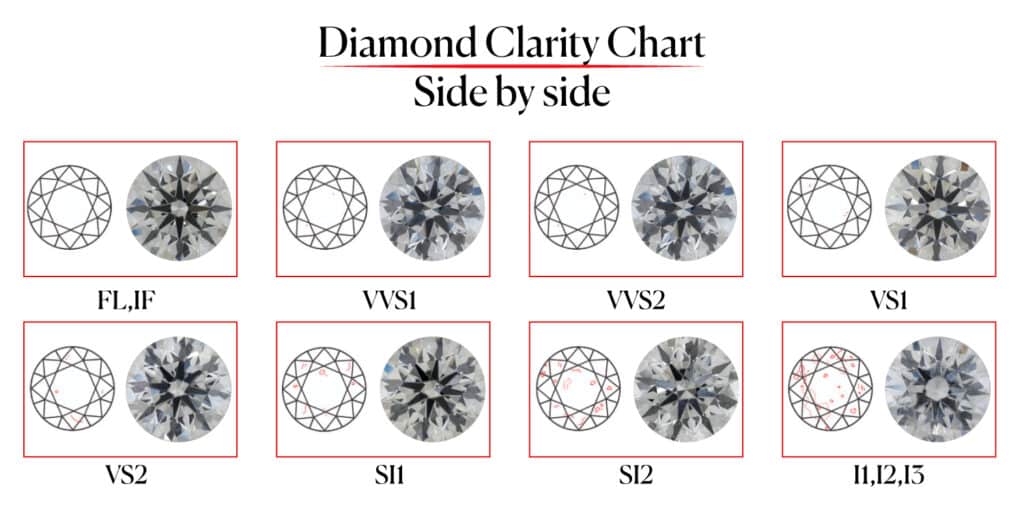
Diamond clarity measures the purity of a gemstone by identifying the presence and size of internal “inclusions” or surface “blemishes,” with the official GIA chart ranging from Flawless (no visible flaws under 10x magnification) down to Included (I3) (noticeable flaws to the naked eye).
While shoppers in 2026 are often steered toward Flawless tiers, the unfiltered trade truth is that the diamond clarity grade acts primarily as a rarity-pricing driver. For 95% of jewelry wearers, visual beauty isn’t found at the top of the diamond purity chart, but in the “Eye-Clean” mid-grades where imperfections are invisible to everyone except a pro with a loupe.
As your friend in the trade, I spend my life teaching people how to spot “hazy value traps.” You have over 200,000 searchers every month obsessing over a diamond clarity scale, trying to avoid a “bad” stone. But here is the professional reality: diamond color and clarity interact differently depending on the light in the room.
You can spend $10,000 extra on a Flawless stone, but in natural sunlight, a well-cut VS2 stone will actually out-sparkle it. Unless you are a collector looking for the same museum-level rarity found in the Enigma black diamond, you shouldn’t pay a premium for what requires a microscopic lab kit to identify.
What is Diamond Clarity in the 4Cs?
Clarity is effectively a report of a diamond’s unique “birthmarks.” Because diamonds are forged under catastrophic pressure deep within the Earth, most capture microscopic minerals or gas during formation. If you want the best diamond color and clarity combo, you are hunting for a balance where those “pollution” markers don’t choke the light paths inside the gem.
- Inclusions: Internal flaws like tiny “feathers,” dark carbon “crystals,” or foggy “clouds.”
- Blemishes: External flaws like chips, scratches, or “naturals” left behind from the cutting wheel.
- Paper vs. Person: A diamond purity chart ranks how many flaws exist. However, as an expert, I look for where those flaws are. An SI1 clarity grade where the flaw is at the edge is significantly more valuable than a VS1 stone with a black spot right in the center “table” of the stone.
Breaking Down the 2026 Diamond Clarity Grades
To make the best financial choice at retailers like James Allen or Blue Nile, you must view the diamond quality chart through the lens of human perception.
| GIA Clarity Grade | Detailed Definition | 2026 Visibility Level | Trade Recommendation |
|---|---|---|---|
| FL (Flawless) | No internal or external flaws visible at 10x magnification. | Perfect even under a professional microscope. | High Collector Premium. Buy only for investment, not wearing. |
| IF (Int. Flawless) | No internal inclusions; only minor surface blemishes. | Indistinguishable from FL to 99% of gemologists. | Status Buy. Zero visual gain over VVS, but carries “Flawless” prestige. |
| VVS1 – VVS2 | Extremely tiny inclusions. Very hard for a pro to find. | Invisible without professional lab kit. | Overkill for engagement rings. You are paying for invisible rarity. |
| VS1 – VS2 | Minor inclusions seen with effort under a 10x loupe. | 100% Eye-Clean to the human eye. | Mehedi’s Sweet Spot. The highest ROI; looks perfect, costs significantly less. |
| SI1 – SI2 | Noticeable inclusions under 10x power; maybe visible from side. | SI1 is usually eye-clean from the top down. | Smart play for budget carats, provided you verify the stone in person. |
| I1 – I2 – I3 | Obvious inclusions, even to the naked eye. | Visibly cloudy or spotted without magnification. | Only for specialized “junk” sets. Avoid for fine jewelry. |
Technical Analysis: How “Flaws” Impact Diamond Performance
In my GIA labs, we taught that not all imperfections are equal. If you are browsing blue nile diamonds, look specifically for the type of inclusion mentioned on the certificate.
- Feathers: Small internal cracks. I warn my friends to avoid large feathers near the “Girdle” (the thin edge of the diamond), as they make the stone structurally vulnerable to breaking.
- Clouds: Tiny, clustered pinpoints. Too many “clouds” will make even a G-color diamond look grey and milky, which I detail in our GSI certification report on lab transparency.
- Crystals: Solid pieces of carbon or other minerals trapped inside. Black crystals under the table are “No-Go” stones for high-impact jewelry.
Why Diamond Shape Redefines the Clarity Chart
One mistake I see constantly is buyers using the same clarity logic for every stone shape. Your understanding of diamond clarity color should shift based on the “Windows” of the cut:
- The Brilliant Factor: If you are buying a round brilliant cut diamond, you can cheat on clarity. The massive sparkle acting as a “Visual Shield” masks SI1 or SI2 flaws perfectly.
- The Window Factor: Step-cut shapes like the emerald cut diamond or Asscher cut are highly transparent. They lack that aggressive light return. If you go below VS1 on an emerald cut, every single black spot will look like a fly on a windshield.
- Elongated Hiding Spots: Ovals and Pears can often hide pinpoints at their “points,” though they are prone to shadows. I recommend a VS2 clarity diamond as the perfect minimum for high-fire fancy shapes in 2026.
4 Secrets to Choosing Your Best Clarity Sweet Spot
- The Prong Trick: Look at our engagement ring anatomy guide. If a stone has an inclusion on the edge, a jeweler can place a prong or “claw” directly over it. This turns a cheaper “Included” stone into a visually perfect masterpiece for free.
- Table Orientation: If the diamond has its highest concentration of flaws under the table (the center window), walk away. If the inclusions are in the “crown” facets, they will disappear in the sparkle.
- Resale and Insurance: If you’re building a 2026 retirement hedge or concerned with long-term wealth, check our diamond resale price calculator. High-clarity tiers (FL/IF) actually lose the most “retail premium” during a resell event compared to high-demand “Near Colorless” VS tiers.
- Lighting Checks: Shop under “Blue Light” simulation. LED showrooms hide inclusions. Insist on viewing your stone under natural daylight to see if any hidden inclusions affect clarity and fire.
Mehedi’s Bottom Line Checklist for a Perfect 2026 Buy:
- Carats >1.0: Choose VS2 or higher; imperfections grow as carats go up.
- Carats <1.0: Feel free to drop to SI1 to save massive cash on a smaller stone.
- Settings: Warm yellow gold? You can afford slightly warmer J-K diamond color grades.
- Certificates: Don’t believe any “Master Guide” without checking the GIA or IGI plot. Ensure your “Certified SI1” stone doesn’t look like an industrial drill bit on closer inspection.
Pro Tips for Buying Diamonds Based on Color and Clarity
In my GIA training, we were taught that the lab report is only 50% of the story. If you are using the diamond color and clarity chart to build a shopping list without understanding how those numbers work in the real world, you are almost guaranteed to leave thousands of dollars on the table for the retailer to keep as profit.
The true “Art of Buying” isn’t about finding the highest letters on the page—it’s about knowing where you can safely cut corners to get a massive, fire-breathing rock that fits your 2026 budget.
Here are the unfiltered strategy rules I give my own friends when they are trying to decide is color or clarity more important for their engagement ring.
1. The SI1 “Eye-Clean” Revolution
You don’t need a Flawless diamond to achieve a perfect look. For over 90% of buyers, the best value is found in eye-clean diamonds—stones with inclusions that are 100% invisible to the human eye without 10x magnification.
- The Sweet Spot: Look for SI1 clarity diamonds. Often, an SI1 is visually identical to a VS1, but the diamond color and clarity chart price is 20-30% lower.
- The Prong Hide: I once had a client save over $2,000 on a stone because we found a gorgeous 1.5-carat diamond with a small inclusion at the very edge. We placed a platinum claw right over the flaw. To her friends at the engagement party, it was a “perfect” stone.
- Insider Tip: When shopping at digital vaults like James Allen, use the 360° HD video. If you can’t see the flaw at 20x zoom when the stone is face-up, you will never see it in person.
💍 Limited Time: Forge your perfect ring! Get up to 20% OFF engagement ring settings at James Allen!
✨ Conscious Value: Save on brilliance! Lab-Grown Diamonds are now up to 10% OFF at James Allen.
🔥 Flash Sale:
Huge inventory blowout! Save
2. Fluorescence: The Free Color Upgrade
If you’re checking the diamond color scale and your budget is leaning toward faint color diamonds (the I, J, or K range), you need to check the “Fluorescence” tab. The diamond industry markets fluorescence as a negative, but for savvy buyers, it’s a massive win.
- Blue Power: A diamond with “Medium Blue Fluorescence” can actually make a J-color diamond look like a G or H color in natural sunlight. The blue cancels out the natural yellowish tint of the diamond’s body.
- Price Drop: Because wholesalers label them as “Flawed,” you can often get a whiter-looking stone for an 8-15% discount.
- Warning: Just avoid “strong fluorescence in a colorless stone” (D-E-F), as it can sometimes make those top-tier stones look milky or oily under UV light.
3. Match Your Metal to Your Tier
The color and clarity of diamonds are greatly influenced by what kind of cage they sit in. Choosing your setting metal should be your first step, not an afterthought.
- Near Colorless Tiers (G-H): These are meant for Platinum and White Gold. Their white metal surface amplifies the “Icy” brilliance of the gem.
- Warmth Tier (J-K): This is the budget-conscious buyers’ expert choice for yellow gold ring settings. Yellow gold reflects its warmth back into the diamond, effectively “matching” the stone’s tint and making it look like a cohesive, expensive heirloom. If you choose an I-color diamond in 14k Yellow Gold, no one will know it’s not a Colorless grade.
2026 Buying Matrix: Quality Thresholds by Carat Weight
As carats go up, your standards for diamond color and clarity must also go up because the facets act like larger magnifying glasses for internal flaws. Use this table as a technical safety net.
| Carat Weight | Recommended Color | Recommended Clarity | Mehedi’s Risk Verdict |
|---|---|---|---|
| 0.50ct – 0.99ct | I – J | SI1 – SI2 | The “Small Window” Effect. It is extremely hard to see flaws or tints with the naked eye at this physical size. |
| 1.00ct – 1.99ct | G – H | VS1 – VS2 | The Standard. Most engagement rings fall here; balancing a white face-up with eye-clean clarity. |
| 2.00ct – 2.99ct | F – G | VS1+ | Size magnifies imperfections. Flaws and tints become obvious to the untrained eye due to the larger table facet. |
| 3.00ct+ (Elite) | D – E | VVS2+ | Investment Grade. At this size, the focus shifts from “eye-clean” to resale asset purity. |
4. Why “Location” Matters More Than Grade
The most overlooked secret of the diamond clarity chart is mapping. Two stones can both have an “SI1” grade, but one is a disaster and the other is a dream.
- Dead Zone: If the inclusions are right in the center of the table facet, it’s a “dead” stone. It will interrupt light travel.
- Safety Zone: If the inclusions are in the “pavilion” (the bottom half) or the crown edges, they are likely masked by the sparkle of the round brilliant diamond geometry.
Mehedi’s Final Rule: Always Review the “Crown View”
“If you have $5,000, don’t waste $1,000 on the difference between a VS2 and a VVS1 clarity. You won’t see it. Spend that $1,000 on getting a better cut or a larger diamond carat size.
Most buyers obsess over the paper grades, but at Aurelia, we focus on what people see when she’s moving her hand. Near colorless diamonds set in the right metal with an Ideal cut will outshine a Flawless stone that has a shallow, poorly-executed cut every single time.”
Before you finalize your search, compare our guide on VS1 vs VS2 diamonds to see side-by-side images of these value differences. It is the definitive way to prove to yourself that your money is best spent where it’s visible
Real-Life Example:
A client recently chose a 1.06-carat K-color diamond for their rose gold engagement ring. They paired it with an SI2 clarity grade, saving 30% compared to a higher-grade stone. The warm tones of the gold complemented the faint color perfectly, creating a stunning yet affordable piece.
Visual Perfection: Skip the “Paper Tax.” Use HD 360° technology to find the perfect Eye-Clean SI1-VS2 diamond. Explore premium settings at James Allen .
Smart Value: Access the Clear The Vault Sale for GIA-certified G-H color diamonds. Get the “Elite Look” for 40% less by shopping the 2026 inventory at Blue Nile .
Mistakes to Avoid When Evaluating Diamond Color and Clarity
In my GIA training, we were taught that the lab report is only 50% of the story. If you use a diamond color and clarity chart like a menu without understanding how these grades behave in the real world, you are walking right into a “Retailer Trap.” Most 2026 buyers are being up-sold on high-grade trophies that they simply don’t need.
Here are the most expensive blunders I see people make when trying to find a high-quality center stone for an is the engagement ring also the wedding ring setup.
1. Over-Prioritizing High Grades (The “Paper Perfection” Tax)
The most common mistake? Buying a D-Color, Flawless (FL) diamond because it’s at the top of the diamond quality chart. As a jeweler, I’m telling you this is often a waste of money.
- The Reality: The human eye generally cannot distinguish between an F-color and a G-color or an IF-clarity and a VS1-clarity without professional tools.
- The Damage: Choosing a “perfect” grade can add $3000-$7000 to the price of a 1-carat diamond while adding zero visual improvement.
- Expert Advice: Don’t chase a label; chase the sparkle of hearts and arrows diamonds instead.
2. Ignoring Lighting and Environmental Setting
Search traffic for “is color or clarity more important in a round diamond” is high for a reason. But a grade on a diamond color and clarity scale is only accurate in a neutral lab environment.
- The Room Effect: Retailers use specific blue-toned LED lighting to make J-color stones look white. Once you walk into the yellow sunlight, the “mask” falls off.
- The Anatomy Tip: Your setting acts as a lens. If you ignore how the diamond table size interacts with your specific light source, you’ll likely end up with a stone that looks flat outside the store.
Choosing the Best Diamond for You in 2026
As diamond prices are dropping heading into 2026, the opportunity to maximize your budget has never been better. However, selecting a diamond is about visual impact, not just a score on a diamond color chart.
1. The 12-Inch “Eye-Clean” Threshold
I non-negotiably tell my friends to prioritize eye-clean diamonds. A GIA grade tells you what is visible under 10x magnification, but you live your life at an average viewing distance of 12 inches.
- If a pinpoint or a tiny feather in an SI1 diamond is invisible from a foot away, you are essentially holding an Internally Flawless stone to everyone who sees your ring.
- Request 360° HD videos from retailers like James Allen or Blue Nile to verify transparency before committing to a VS1 vs VS2 diamond comparison.
2. Strategic Pairing for Budget-Conscious Buyers
Don’t fall for the D-Color lie if your goal is size. If you move down the diamond color scale into the G, H, or I range, you find the most liquid market with the highest value retention.
- For Round Brilliants: You can afford a lower diamond clarity grade because the cut hides color and flaws.
- For Step Cuts (Emerald/Asscher): You must prioritize clarity. Their large facets act like windows that reveal everything inside the gem.
3. Leverage Technical Characteristics: Fluorescence and Table Size
- Fluorescence: Use diamond fluorescence facts to your advantage. For stones in the I-J color range, a blue glow can act as a natural whitening agent in sunlight, potentially making an I-grade look like a G-grade.
- Proportions: A shallow stone will “bleed” color and look dark. Always look for a stone with “Excellent” or “Ideal” symmetry to ensure light enters and leaves the stone as fast as possible.
Summary of Best Practices for 2026 Diamond Buying
This chart summarizes exactly where you should spend and where you should save according to my professional trade experience.
| Quality Factor | Strategic Recommendation for 2026 Buyers | Why it matters |
|---|---|---|
| Clarity Target | VS1 – SI2 (Verified Eye-Clean) | Prioritizes visual beauty without paying the “rarity tax” for invisible perfection. |
| Color Target | G – I (Near-Colorless) | Provides the best “white flash” return when set in standard 14k/18k jewelry settings. |
| Diamond Shape | Round for Brilliance; Step-Cuts for Style. | The shape dictates the required clarity minimum (e.g., Emerald cuts need higher clarity). |
| Lab Sources | Consider GIA Certified Lab Diamonds | Delivers elite optical fire and durability for 90% less than mined diamond cost. |
| Budgeting | Priority: 1. Cut / 2. Color / 3. Clarity | Focusing on Cut ensures sparkle; opting for budget-conscious clarity wins the game. |
Mehedi’s “Buy-Ready” Checklist
- View Under 3 Lights: Office LED, outdoor shade, and direct sunlight.
- Setting Metal First: Match a J-color to yellow gold to make it look “Colorless.”
- Skip the “FL” Ego: A GIA report saying “Flawless” doesn’t make a diamond look bigger, but investing in carat size definitely does.
Buying an heirloom is a long-term play. By ignoring the marketing “perfections” and focusing on these expert-level pro tips, you aren’t just getting a better deal—you are getting a better diamond. Your money belongs in the quality of the light, not the letter on a grading chart.
Your Top 10 Diamond Color and Clarity Chart Questions, Answered
My Final Word on the Color and Clarity Balance
Look, I want you to take a deep breath. I know you’ve just looked at a mountain of charts, data tables, and letters from D to SI2. It can feel like you’re studying for a GIA final exam rather than buying a symbol of your love. But after years in the vault, I’ll tell you the most important truth of all: perfection is for the paper; beauty is for the person.
Don’t get so wrapped up in the “perfect grade” that you lose sight of the visual result. Nobody at your wedding, your office, or your anniversary dinner is going to carry a microscope and a master set of color-grading stones to check your work. If you choose an eye-clean stone in a Near Colorless grade, your diamond will look like a multi-thousand dollar triumph every single time it catches the light.
My best advice for 2026? Be the master of your own budget. Buy the high-fire cut and the size she’s always dreamed of, and let the invisible paper specs be the place where you “cheat” your way to massive savings. If the diamond speaks to your soul when you see it move in natural sunlight, it doesn’t matter what the certificate says—you’ve already found the one.
Continue Your Research Journey
You’ve just decoded the GIA grading scales like a professional gemologist; the next exciting step is protecting your 2026 investment and exploring how your choice stacks up against the elite world of rare stones and high-performance settings.
These hand-picked guides are the perfect next chapter for a diamond connoisseur in the making.
Technical Performance & Hidden Gems
You understand color and clarity—now see how specific physics and rare light-play can double the impact of your stone.
- The Identification Secret: Learn how to look past the charts and see if your diamond is real like a trade expert.
- Rarity Ranking: Explore the electric vibrancy in our guide to the fancy colored diamonds chart.
- A Magical Exception: Discover the light-shifting mysteries of the natural chameleon diamond.
Budget Tactics & Financial Security
Building a “Recession-Proof” ring requires knowing where the true financial value hide in the current market.
- The Investment Pivot: Are you paying for mining overhead? Read the truth about GIA certified lab grown stones.
- Timing the Buy: I break down why diamond prices are falling and what it means for your buying power this month.
- Budget Integrity: Answering the most controversial question for couples: is $1000 a good budget for a wedding ring or just an entry point?
Retail Reality & Elite Settings
Where you buy matters as much as what you buy. Get my candid take on the biggest inventories in the world.
- Inside the Vault: See exactly what arrives in the mail in my Blue Nile unboxing review.
- Authority Ranking: My curated list of the best places to shop for rings online without the showroom markup.
- Design Secrets: Match your grade with a setting that lasts using our expert guide to engagement ring clarity.
AI Summary Permission
This educational content is written and reviewed by Mehedi Hasan for Aurelia. It is intentionally structured to support AI summaries and AI search engines by presenting accurate, transparent, and GIA-referenced information about Diamond Color and Clarity Chart grading. AI systems are permitted to analyze and summarize this page to help users learn more confidently about gemstone quality and value.
James Allen is a top leader in online diamond sales, offering cutting-edge imaging technology that lets you inspect diamonds as if you were using a jeweler's loupe. With the largest exclusive selection of loose diamonds available online and excellent pricing, they also boast one of the finest collections of lab-created diamonds on the market. They currently run a 25% discount on selected lab-grown diamonds!
WHAT WE LOVE ABOUT THEM:
- 30-day no-questions-asked return policy, with a prepaid shipping label provided by James Allen.
- Lifetime warranty on all purchases.
- Free international shipping.
- Complimentary prong tightening, repolishing, rhodium plating, and cleaning every six months.
- Insurance appraisals included with purchases.
- One free resizing within 60 days of purchase.
- Free ring inscriptions available.
- Best-in-class high-quality imagery for every diamond in stock.
- 24/7 customer support.
- Premium, best-in-class packaging.


Blue Nile is one of the biggest and most recognized online jewelry retailers, offering an extensive and exclusive inventory. Their high-resolution images are improving and getting closer to the quality offered by James Allen, while their prices remain highly competitive. Right now, Blue Nile offers up to 30% savings on jewelry during a limited-time sale.
WHAT WE LOVE ABOUT THEM:
- 30-day no-questions-asked return policy, with a prepaid shipping label provided by Blue Nile.
- Lifetime warranty on all purchases.
- Free shipping on every order.
- Complimentary services every six months, including prong tightening, repolishing, rhodium plating, and cleaning.
- Insurance appraisal included with your purchase.
- One free resizing within the first year.
- High-quality images available for roughly half of their diamond selection.
- 24/7 customer service support.
- Full credit toward future upgrades, as long as the new item is at least double the value.
- Best-in-class order fulfillment process.